
Tobias Lasse Karlsson Saksen
What do you want to be when you grow up?
This is a question many children hear throughout their upbringing, a question that often implies—whether vaguely assumed or clearly defined—a particular educational trajectory with a more or less gradual transition into working life. As adults, we are rarely asked this question. Adulthood instead carries expectations about who one is and what one is supposed to do. But what does it mean, as an adult, to return to the metaphorical school desk in order to breathe new life into the question: “perhaps this is what I am meant to become when I grow up”?
Educational pathways and transitions into study or working life are often described and explained in terms of causality. Yet, while they may at times appear linear, there is also a wealth of examples showing how they might more aptly be understood as a landscape of winding paths, where previously unforeseen opportunities emerge, while well-defined routes bend, branch off, or change direction entirely.
In his keynote, Tobias addresses these questions and demonstrates how the challenges associated with the development of vocational students’ professional identities can be met through the pedagogical and institutional practices of vocational education.

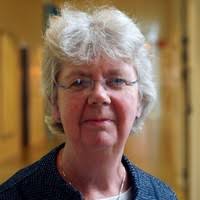
Viveca Lindberg
While working with the Stockholm VET-YL-group 2010-2016, Viveca Lindberg was the coordinator of two national postgraduate programmes in vocational didactics, a collaboration between six Swedish universities strengthened with an international advisory board. Her research focuses on aspects of vocational knowledge as it is applied in teaching and learning contexts, with a particular interest in the interplay between the macro, meso and micro levels. She is currently working on the following projects:
1) The history of vocational education for women.
2) Comparisons between three professional higher education programmes and the challenges they face in preparing students for academic and professional literacy practices.
3) Developmental work research related to the integration of school- and work-based learning in Swedish upper secondary vocational education and training (VET).
4) Changes in eligibility requirements for teacher education programmes in the textile field, and the school types and subjects these programmes qualify for, from 1970 to 2025.
 Stockholm International Conference of Research in Vocational Education and Training